Shaping the modern public affairs professional
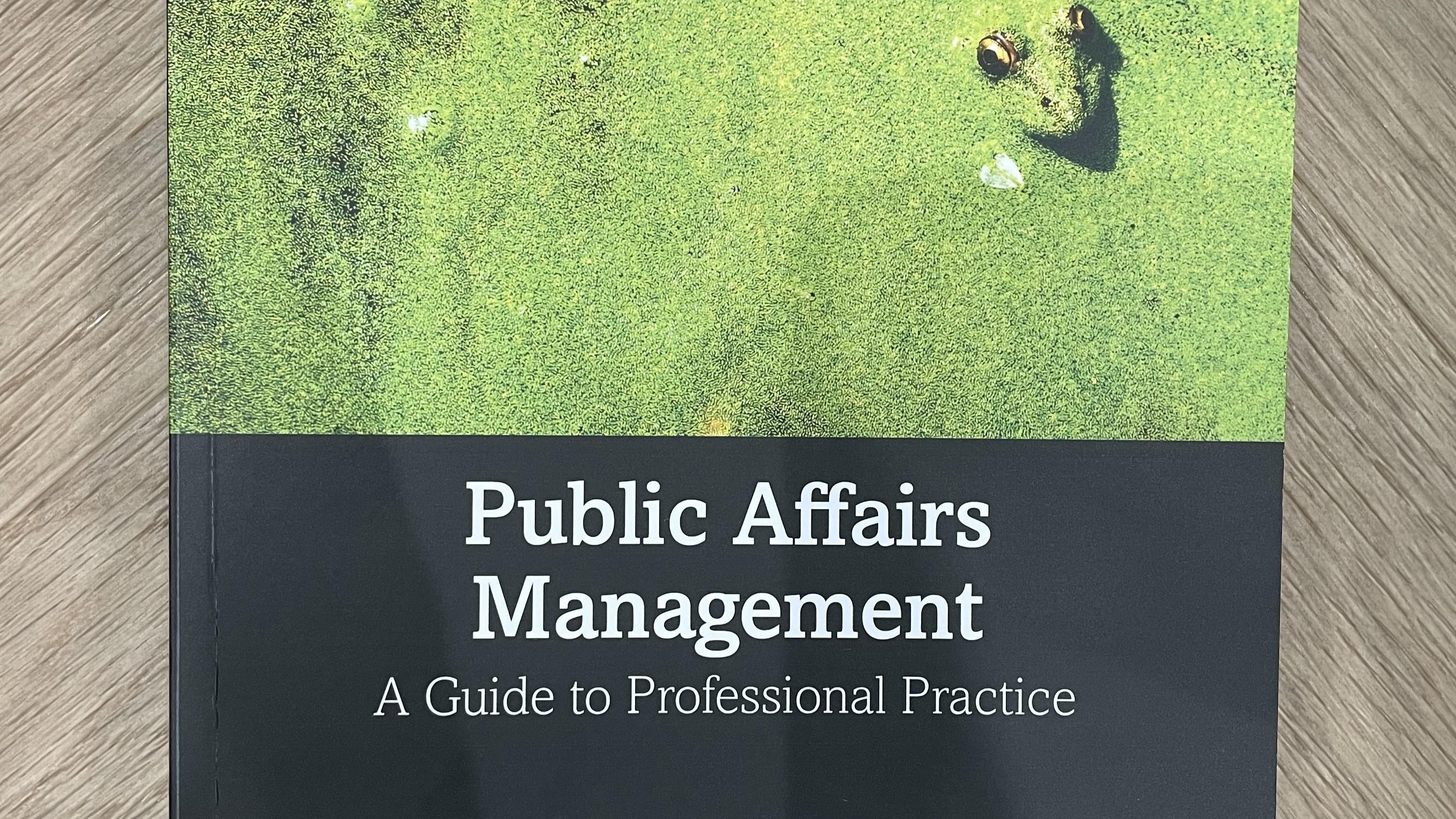
A review of Sarah Bowman and Heather Yaxley’s new book, Public Affairs Management: A Guide to Professional Practice, by CIPR Public Affairs committee member James Boyd-Wallis
“Our intention is to make visible that which is commonly thought of as hidden”, say Sarah Bowman and Heather Yaxley in their new book on public affairs management.
That sentiment connects both the range and type of literature and tools the book draws on and its purpose.
Some public affairs books focus on the ‘art of lobbying’ and can portray the profession as a backroom activity for those with connections and influence. Others can focus on the role of communications, which is but one part of the practice of public affairs.
Few manage to combine the totality of public affairs. Even fewer attempt to introduce and inform the reader about the profession's academic theory and foundation.
Dr Sarah Bowman, an assistant professor at Northumbria University, and Heather Yaxley, the founder of Applause Consultancy, achieve this and more in their new book on public affairs management.
In doing so, they make visible a range of material not usually combined in one book and help reveal the theory, tools and techniques that will help shape a modern, professional and ethical public affairs practitioner today.
But how do the authors define public affairs?
Public affairs is a misunderstood profession. Many confuse it with political communication, lobbying, and political public relations.
As the authors state, the book intentionally challenges the traditional view of public affairs as something undertaken by “privileged individuals with personal contacts and knowledge of opaque political systems, whose work mostly benefits the interests of large corporations”.
Instead, Sarah and Heather take a simple and accommodating view.
Public affairs shapes decisions in the political arena, conducted by a range of organisations that seek to influence local, regional, national or supra-national political decisions.
With this definition established, the book provides essential insight into effective and ethical professional public affairs.
To do this, the book outlines three levels of public affairs, including the macro, meso and micro, split across five parts.
The macro level provides an overview of the political area, including the systems, institutions, and actors, and the policy landscape, including evidence-informed policy, the policy-making process, and policy advocacy.
The meso level outlines the principles and practices of public affairs and examines its strategic contribution, decision-making, reflective planning, and research and analysis.
Perhaps most relevant for public affairs practitioners, the final micro level examines practitioner performance, including professionalism, a practice framework and what reflexive and ethical public affairs looks like.
The authors include a wealth of public affairs literature within each section.
For instance, in the first section on political systems, the authors dig into academic research on the causes of political tension. In the final section on ethical practice, they summarise the literature on ethical judgement, which helps outline how public affairs professionals should develop such judgement as a habit of individual practice.
In doing so, where some books on public affairs remain at the level of practice, this book offers the theory behind professional public affairs today.
In my view, this enhances the book and provides a depth and, therefore, a level of understanding that is sometimes lacking in other books on this subject.
Another key strength of this book is how it translates theory and practice into frameworks and models. Such tools offer an accessible way to put the book's insights into practice.
For instance, in the section on reflexive planning, the book outlines the Four Cs model, with four prompts to help practitioners ensure effective planning through Clarity, Congruity, Constraints, and Care. For a busy public affairs professional, such tools provide useful snapshots which can enhance planning and practice.
Overall, the book is a welcome and much-needed addition to the literature on public affairs.
When public affairs is the “essence of democracy”, it is a must-read for professionals, students and organisations wanting to practice effective and ethical public affairs.
Save 20% on the paperback until end of July via: https://tinyurl.com/yjjv8xry and add the promo code 26ESA2 during August and September.